GSM-based vehicle tracking with SMS status reporting
The Connix Asset Tracker reports vehicle location, fuel level and engine temperature by SMS to any ordinary mobile phone.
Introduction
Vehicles and mobile assets are expensive to own and difficult to supervise once they leave the premises. Owners and fleet managers need to know where a vehicle is and how it is behaving, without depending on a costly software subscription or on a mobile data connection that may not be available on every route.
The Connix Asset Tracker is a compact, rugged tracking device built for this purpose. It combines a GPS receiver, a 4G/2G GSM module and interfaces for vehicle sensors in one unit. Instead of streaming data to a server over the internet, it reports vehicle status by SMS to numbers chosen by the owner, so the information arrives on any ordinary mobile phone.
Application overview
The tracker is installed in the vehicle and powered from the vehicle supply. It continuously knows its own position through GPS and can read vehicle parameters, such as fuel level and engine temperature, through its analog and RS485 inputs. The device communicates only through SMS and has two modes of operation:
- Periodic reporting. The tracker sends a status SMS to the defined number at a set interval, giving location and vehicle parameters.
- On-demand reporting. When a defined number asks for the status of the vehicle, the tracker replies with the current location and parameters.
Because no internet data connection is used, the system needs no cloud account, application server or data plan. It works wherever the cellular network can deliver an SMS.
Key features
| Feature | Description |
|---|---|
| Built-in GSM module (4G and 2G) | The GSM module is integrated in the device, so no external modem is needed. It supports 4G and 2G networks, and the 2G fallback helps keep the device reachable in areas with weak or no 4G coverage. |
| Built-in GPS | An integrated GPS receiver provides the vehicle coordinates whenever they are required, either for a periodic report or for a status request. |
| 2 analog inputs and RS485 input | Two analog inputs and one RS485 port take data from vehicle sensors such as fuel level and engine temperature, and other parameters where needed. |
| Periodic SMS status | The device does not use the internet for data transmission. It sends a periodic SMS to a defined number with the vehicle location and other parameters. |
| Reply on request | When a defined number asks for the status, the device replies by SMS with the current vehicle status. |
| Rugged enclosure | The enclosure is built to support harsh environments, as found on commercial, construction and long-haul vehicles. |
System block diagram
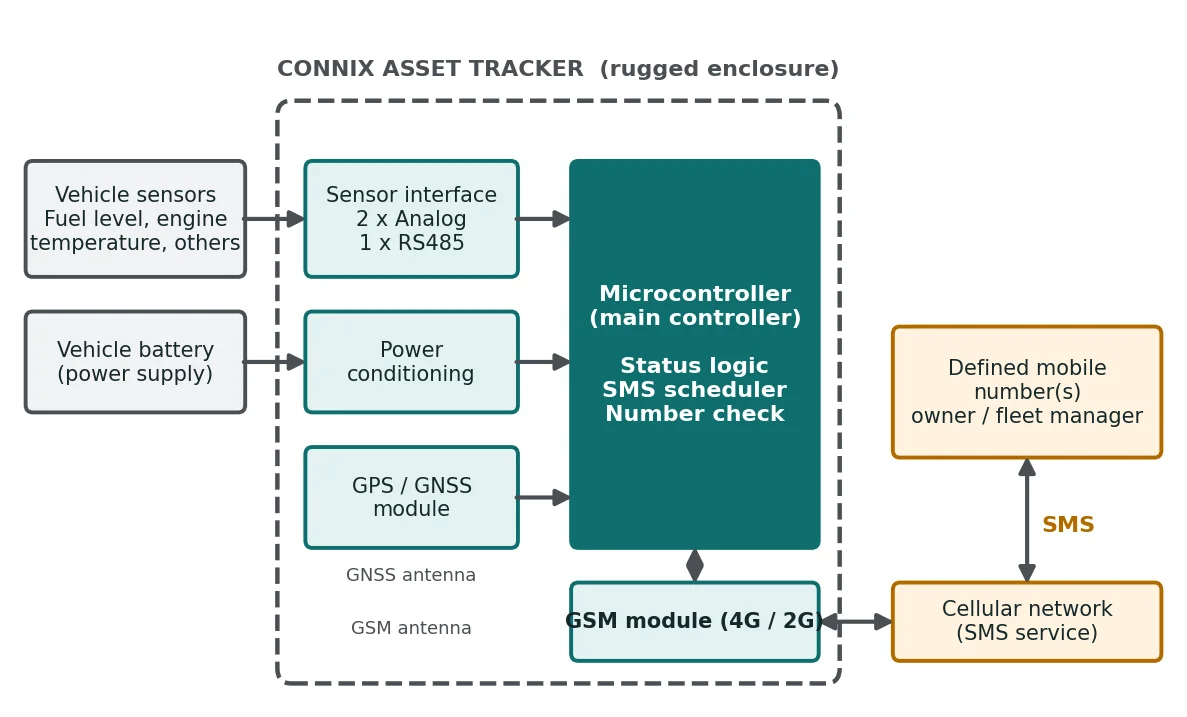
Figure 1 shows the main blocks of the tracker and how it connects to the vehicle and to the cellular network.
| Block | Function |
|---|---|
| Microcontroller | Main controller of the device. It runs the status logic, keeps the report timer, builds the SMS text and checks that incoming requests come from a defined number. |
| GPS / GNSS module | Provides the vehicle coordinates to the controller through the GNSS antenna. |
| GSM module (4G / 2G) | Registers on the cellular network and sends and receives SMS through the GSM antenna. |
| Sensor interface | Two analog inputs and one RS485 port that connect the vehicle sensors to the controller. |
| Power conditioning | Converts the vehicle battery supply into the stable supply levels needed by the electronics. |
| Rugged enclosure | Houses all the electronics and protects them against the vehicle environment. |
Principle of operation
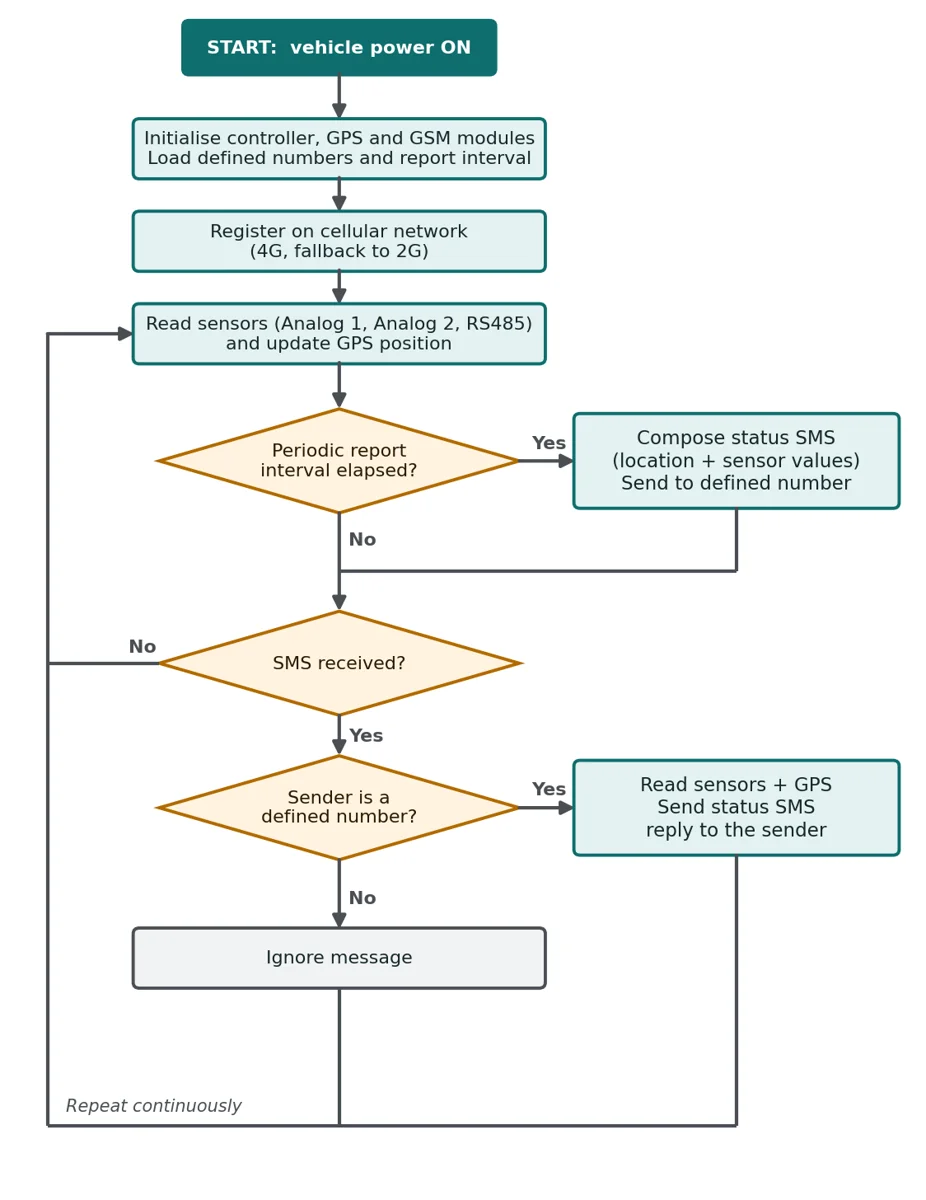
On power-up the controller initialises the GPS and GSM modules, loads the defined numbers and the report interval, and registers on the cellular network. It then reads the sensors and updates the GPS position in a continuous loop.
When the report interval has elapsed, the controller builds a status message from the latest position and sensor values and sends it by SMS to the defined number. At any time, the device also listens for incoming SMS. If a message arrives from a defined number, the device replies with the current status. Messages from any other number are ignored, so only authorised persons can ask for the location of the vehicle.
Interfaces
- Analog and RS485 sensor inputs. The two analog inputs can be connected to vehicle sensors that give an analog output, for example a fuel level sender or an engine temperature sensor. The RS485 input allows digital sensors and vehicle electronics that use RS485 to be connected as well, so additional parameters can be added when they are needed. The values read through these inputs are included in the status SMS along with the location.
- GPS. The built-in GPS gives the position of the vehicle as coordinates. The coordinates are read when a report is due or when a status request is received, so the message always carries the latest known position.
- GSM and SMS. The 4G/2G GSM module is used for SMS only. The owner defines the number or numbers that receive the periodic status message and that are allowed to request the status. Using 2G as a fallback to 4G supports SMS delivery in areas where 4G coverage is limited.
SMS reporting
The text below is only an illustration of the kind of information a status SMS carries. The final message format will be fixed with the firmware.
| Setting | Purpose |
|---|---|
| Defined number(s) | The mobile number(s) that receive the periodic status SMS and that are allowed to request the status. |
| Report interval | How often the device sends the periodic status SMS. |
CONNIX TRACKER
Location: xx.xxxx N, yy.yyyy E
Fuel level: xx %
Engine temp: xx C
Time: dd/mm/yyyy hh:mm
Typical applications
- Fleet and logistics. Locate trucks, tempos and delivery vehicles and watch fuel level on every trip.
- Rental vehicles. Keep track of hired or shared vehicles that are used away from the owner.
- Construction and agriculture equipment. Monitor excavators, loaders, tractors and other equipment working in tough conditions.
- Other mobile assets. Track generator sets, trailers and other mobile assets that have no internet access.
Advantages
- Simple to use. No cloud account, server or mobile data plan is needed. Status is read on any mobile phone.
- Works with basic coverage. Reporting by SMS works with the ordinary cellular network and does not depend on internet coverage.
- Compact and integrated. GPS, GSM and sensor inputs are in a single unit, which makes installation quick.
- Controlled access. Only defined numbers can ask for the vehicle status.
- Built to last. The rugged enclosure suits harsh vehicle environments.
Specifications and features are subject to change without notice as the product is developed.
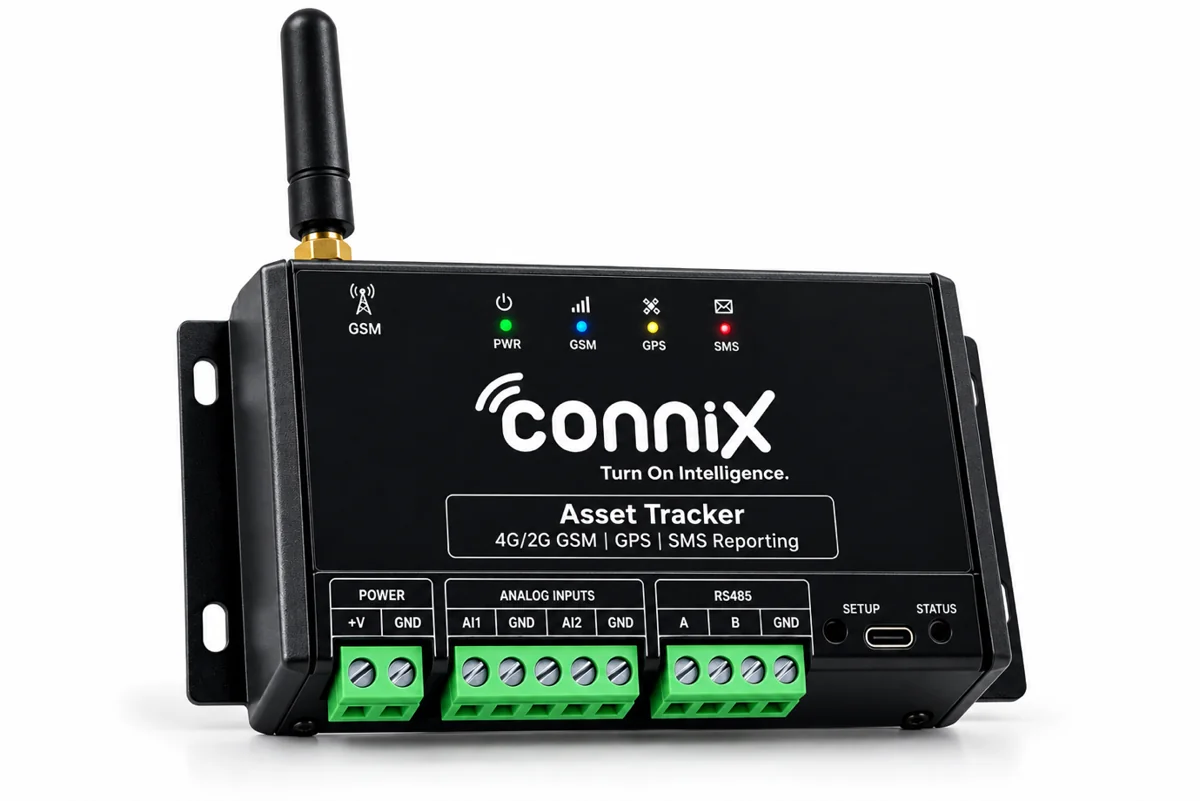
Illustrative image; the end product may differ.
Planning a similar deployment?
Tell us about your sites — we'll share what worked here.